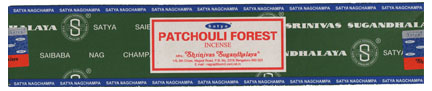
We don’t keep it a secret that we are in the camp of patchouli lovers. We are aware that patchouli can be somewhat polarizing. Those that tend to dislike it describe it as smelling like dirt, dirty unwashed bodies, swampy, etc. Those that do like it describe a sweetish, earthy, spicy quality. How can we bridge this gap so that everyone can enjoy? Satya Patchouli Forest does just that. Like most Satya incenses, it has a semi-sweet, amber, vanilla base, but Satya Patchouli Forest is a bit sweeter than the average Satya and it has a very carefully measured, earthy component of dark Indonesian patchouli. It’s such a light element that even those who tend to dislike patchouli can still appreciate this selection. Of Satya’s patchouli incenses, this is certainly the sweetest offering. For something drier, Satya Patchouli would be a thought, or drier still, Satya 60’s Patchouli would be the way to go. As they get drier in fragrance, the more noticeable the patchouli becomes. Satya Patchouli Forest offers a perfectly balanced fragrance that is sweet enough for even those who are not fans of patchouli, but for those that do love patchouli, it’s heavenly.
Author: Dr. Seth
-
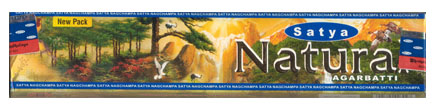
About Satya Natural Incense
Having we have been carrying incenses since 1988, we tend to take certain incenses for granted. One such selection is Satya Natural. This is an incense we have had since the early 90s and it’s one such example of an item that we do take for granted. We unfairly assume everyone has tried it at some time, but that’s grossly unfair. There are so many selections available that it’s easy to simply not get around to trying it. In its core, it is a classic Satya incense. That means it has a semi-sweet, amber, vanilla base upon which to build. Satya Natural sets its self apart with having toothsome elements of chocolate, white chocolate, and hot cappuccino. It was the very first incense to give the classic Nag Champa s good run for its money. That was back when it was simply called “Satya” and had purple ends on the sticks. Now it has yellow ends, the packaging has changed, and is known as Satya Natural, but thank heavens, it has remained unchanged since it was first released in the 90s. It has a way of transforming any place you’re dwelling into home.
-
About Raj Laxmi Incense
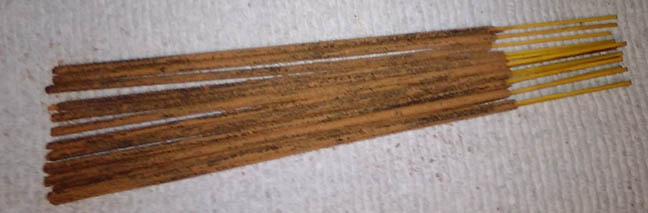
There’s always room for another classic champa incense. We don’t keep it a secret that the most well known of champa incenses has changed so very much since the early 90s that we can’t recognize it at all. Some champas haven’t changed, Raj Laxmi Incense is one of them. Just what is a champa, one may ask? Champas are incenses that are defined by the key component called “halmaddi”. It is a sap from a specific tree that gives champa incenses their distinctive sweet, spicy, floral quality. All too many incenses called a champa contain no halmaddi. Once one has had a few halmaddi containing champas they develop a nose for just what it’s like. a few examples besides Raj Laxmi Incense are Sairanjani Champa, Tree of Life Champa, and Jah Love. Another clue to the presence of halmaddi is that the sticks are often soft and slightly damp to the touch. Halmaddi has the strange property of drawing moisture from the surrounding air. If you’re a champa enthusiast, do give Raj Laxmi a go.
-
About Amethyst Incense
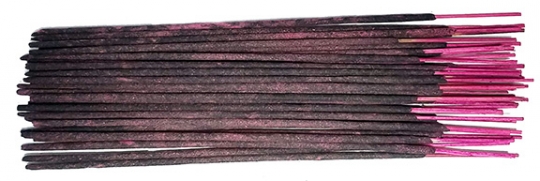
No matter how much we try, some incenses defy us to easily define them. Amethyst Incense is one of those most challenging selections to describe. It’s such a remarkable fragrance that it’s well worth a try. Since it is made by Haridus Madhavdas, the same manufacturers as Egyptian, Superb Sandal, and Crystal Rose, it will have that buttery, amber, vanilla, basmati rice, toffee core fragrance that seems to run throughout nearly everything this manufacturer creates. From there, things get really interesting. It offers notes of frankincense, cleansing elements of lavender and a noticeable component of something like African violet. It’s such a complex, well balanced and intriguing fragrance that we ourselves probably use nearly as much as we sell. Amethyst Incense has developed such a following that it is not unheard of for some purchases to approach a full kilo at a time. Please do give it a whirl. We’re confident it will become a favorite. Interestingly, it also is known as “Extra Special Pride”, or “Super Pride” depending on where it is found.
-
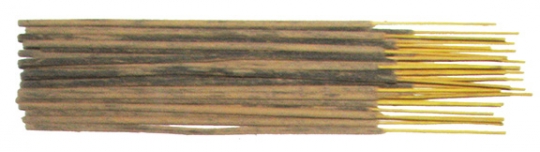
About Jah Love Incense
There can never be too much love, and there can never be too many champa incenses. It’s but one of may rules we live by. Jah Love is indeed a classic champa incense. So you ask, “What is a champa incense?” A true champa is defined by the presence of one key component called “halmaddhi”, sometimes spelled “halmaddi”. It is a sap from a very specific tree that lends its unique, sweet, spicy, floral element to incenses. Once one has had a few halmaddhi incenses, they will be able to spot it right away. One of the tell-tale signs is that the sticks rarely completely dry out. Halmaddhi has a way of always remaining slightly damp by attracting water right out of the air, so champas tend to be somewhat soft and damp to the touch. Jah Love certainly is one of the few remaining halmaddhi-based incenses along with other classics such as Raj Laxmi, Sairanjani Champa, Nitiraj Natural Masala, and Shanthimalai Nag Champa as examples.
-
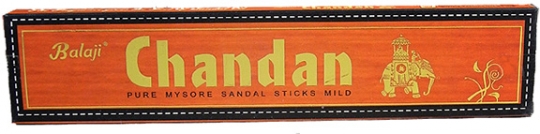
About Balaji Chandan
Chandan is fancy talk for sandalwood. There are likely thousands of different sandalwood incenses. We ourselves probably have a few dozen, each so very different from the next. One of our very favorites is Balaji Chandan. We weren’t surprised as the entire Balaji line is so wonderful. It’s a fairly potent sandalwood fortified with sandalwood oil. This offers a considerably richer, more complex profile to the fragrance. Its quality more accurately matches incenses that cost nearly double, but that’s a secret we all can keep. When we sampled it, we expected it to be considerably more costly given its depth, but who are we to argue when the price is right? It’s an absolute must-have for not just sandalwood enthusiasts, but for anyone who enjoys quality incenses.
-
About Vijayshree Golden Nag Champa Cones
We don’t have many cone incenses. The truth is, there aren’t many that impress us. Granted, they serve a purpose, giving a fairly significant amount of fragrance off in a shorter time. They tend to be cleaner than sticks as their ashes are easier to contain. What is unfortunate is that many of the better sticks cannot be formed into cones for various reasons. One reason is that the makeup of the incense requires a bamboo backbone to keep it together. It would be too soft or crumbly to hold together as a cone. Some just wouldn’t burn right. More oxygen is needed to keep the stick lit, so if it’s in cone form, the cone would burn for a while then go out part of the way down. Nag Champa has both problems. It’s crumbly and it has a fairly high O2 requirement, so that is why Nag Champa cones seldom resemble Nag Champa. They have to be formulated differently for both structural and combustive reasons. This hasn’t stopped manufacturers from making cones called “Nag Champa”, but few come at all close to the stick form. Out of the ones we have tried, Vijayshree Golden Nag Champa Cones comes the closest. Once one’s expectations are such to appreciate a fragrance for what it is, rather than comparing it to another, these might just be our over all favorite cones. How close does it come to Nag Champa? We would say close enough that they have earned the right to put the title on the pack.
-
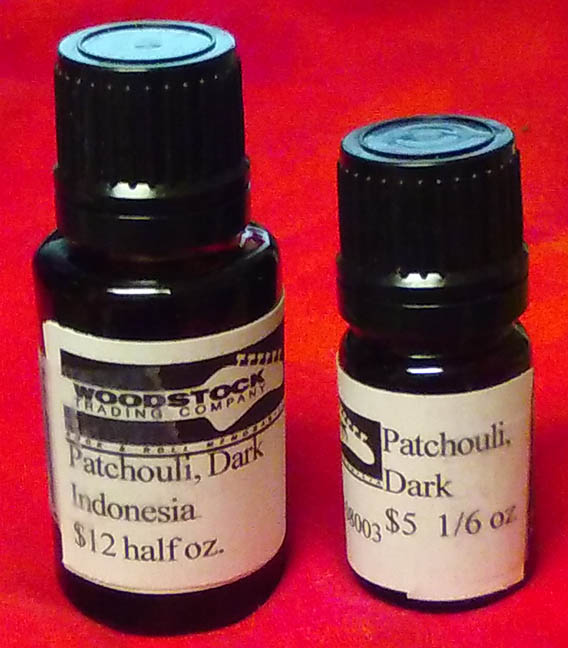
About Patchouli, Dark
Patchouli, Dark is our fancy way of saying “Pure Dark Patchouli Oil” It’s intuitive that the title would bring up the question, “Is there light patchouli oil?” There is, but it differs dramatically from dark patchouli oil. Light patchouli oil, being lighter in color is created when patchouli oil is distilled and kept in chemically neutral vessels such as stainless steel, ceramic, glass, etc. This keeps the oil from any change. It tends to be aggressive, hot, sometimes animal-like, and with notes akin to black and or white pepper. We’re not saying it’s bad. It’s simply a preference. Dark patchouli oil is created when the oil is stored in cast iron. The essential oil reacts with the iron, darkening the color, smoothing out the more aggressive, hotter notes, leaving the sweeter, earthier scent that we more often expect from patchouli. Is it better than light patchouli? That’s purely based on opinion, so we can’t say. There are times we prefer one or the other or even a combination of the two. One of our favorite uses for dark patchouli is to put a few drops directly onto an incense stick. This will give off a powerful note of patchouli to accompany the base stick. The only key is to not get any on the very tip that flame is applied to.
-

About Satya Patchouli
There are dozens of different Satya incenses. We have our share of them, but we don’t have them all by far. Nearly all of them, with a few exceptions have a similar core fragrance, that being a medium bodied, semi-sweet amber, vanilla-like quality. From there, each has its variant on that theme. They have three differing patchouli variants, Satya Patchouli, Satya Patchouli Forest, Satya Natural Patchouli, and Satya 60’s Patchouli. All three are wonderful in their own right. Of the three, Satya Patchouli is the most straightforward in its approach to patchouli. It has that classic semi-sweet core that we expect, but to set it aside from the rest, it has a noticeable element of earthy, rich patchouli. The manufacturers recognize the quality of this particular offering and have made it available in 40g packs. That is reserved for only a dozen or so of their fragrances. If you’re a nag champa fan and a patchouli lover, this is an intuitive choice.
-
About Our Incense Sleeves
Normally, we would feel a twinge of remorse packing up all of these incenses, giving out samples and all of that and create such a mess with so many plastic sleeves. That’s one reason why we use cellophane rather than plastic. Plastic is much easier to come by, and it’s considerably less expensive, but cellophane will biodegrade. In fact, they are so biodegradable that if we keep sleeves around for more than a year or so, they are already beginning to break down. Another reason we use cellophane is that it provides a far superior barrier for fragrance than plastic. Many fragrances are oils or are fairly oily. Plastic is somewhat permeable to these oils and the incense wouldn’t be as fragrant after a while. Cellophane is actually a polymer of glucose, and if anyone has tried to dissolve sugar in oil, they’ll find out they cannot. So these oils are repelled by the sugar-based makeup of cellophane. Cellophane also is permeable to moisture, so damper, fresher incenses won’t mildew. The easiest way to test if someone is using plastic or cellophane is the flame test. If it melts, curls up, sometimes it may drip while it’s burning, safe to say that’s plastic. If it burns more like paper, no dripping or curling up but perhaps a carbon residue, it’s cellophane. Hopefully we’ll be able to keep using cellophane. Sources are getting more and more rare each day.