We do get asked now and again, “What’s in the mystery packs?” We appreciate irony as much as the next guy, but it does bring up a real question, “What really is in the mystery packs?” Many of the incenses that we weigh out into packs end up with a small portion that isn’t enough to make a full pack, packs of discontinued items, and the remains of packs that we opened ourselves to sample out all begin to add up after some time. This is what ends up in mystery packs. So it’s not cast-offs, it’s all legit incense that we just don’t know what to with. The good thing about mystery packs is quantity. There’s a generous 35g in each pack. Another good thing is that it varies so much from stick to stick. The downside is that the fragrances tend to blend together, so if you find something you like and in the chance we can identify it, new sticks of the same type will be different. We use them for road trips when we want variety without carrying many packs. So go with the flow, appreciate the impulsive nature of our mystery packs.
Author: Dr. Seth
-
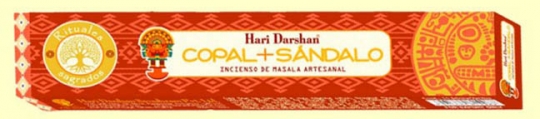
Hari Darshan Copal + Sandalo
One of the perks of what we do is that we get to try out all kinds of new incenses. Sometimes it’s not much of a thrill, but now and again, something comes up that wows us. Hari Darshan Copal + Sandalo Incense is one of those items that we checked out and went gaga over. Its depth, richness, and complexity is that of incenses that can easily cost three times as much. It has the qualities of some of the higher end resin based stick incenses and more. It’s not just dry resin and sandalwood. It has amber elements that sweeten the deal and really permit this incense to feature piney, clean copal and cooling, meditative sandalwood. The sweeter element provides a perfect backdrop for the resinous notes and sandalwood. We have a few others in the Hari Darshan line and we’ll eventually have them all. They’re that good.
-
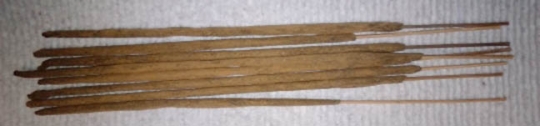
Tree of Life Champa
We love champa incenses. This isn’t something that we keep as a secret. We’re always looking for another one to add to our selection. When we found Tree of Life Champa, we knew it had to be part of our library of incenses. This offering is from the Tree of Life company that also produces the wonderful and powerful Mars Choice and Champaka, so we knew it would be solid before we even tried it. It’s such a wonderful classic champa incense. It’s rich, complex, satisfying, semi-sweet, full of spice and distant florals. It gets much of its fragrance from that key component called “Halmaddhi” that defines champa incenses and distinguishes them from others. Please, if you’re a champa fan, or even just an incense user, Tree of Life Champa needs to be experienced.
-
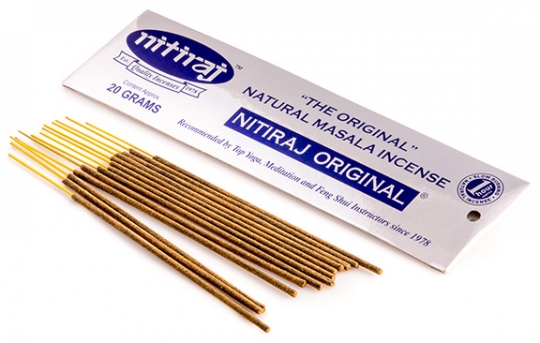
Nitiraj Natural Masala Incense
Over the years, there have been many champa incenses, all of such varying quality. The classic that we all know so well, the famed blue box Shrinivas Sugandhalaya has undergone so many changes since the 90s that it is nothing similar to its original formula. It’s still a good fragrance, but it has changed so very much. A champa that we have come to love so much, Nitiraj Natural Masala Incense, thankfully hasn’t changed as long as we have known it. It’s a classic champa, meaning what? A true champa should include a key ingredient known as “halmaddhi” (the spelling of which can vary). It’s a sap from a specific tree, much like other sap incenses like frankincense or myrrh. It carries a unique fragrance that is semi-sweet, somewhat spicy, and somewhat floral. Halmaddhi defines this incense. It is right up front. It captures the scent of headshops and black light rooms and 60s pads. It’s like a time machine in a stick of incense. If you’re a champa fan, please do give this selection a go.
-
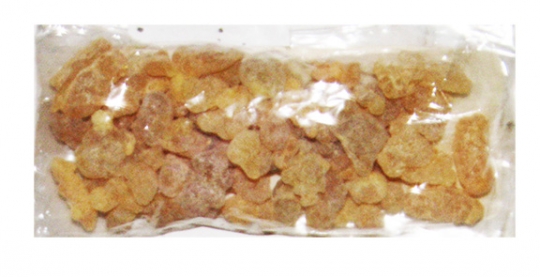
Frankincense Better
Nearly all of our incense dealers offer frankincense. It varies in quality considerably from dealer to dealer. It can even differ greatly from one dealer from batch to batch. It is a natural product, so there is little way to know what one is getting from run to run. We found a a source that deals in larger quantities of varying grades of frankincense and other resin incenses nearly exclusively. The way to get the good stuff is to deal with someone that specializes in frankincense rather than a dealer that has it as an after thought. This is why we dubbed our frankincense “Frankincense Better“.
We had choices to make, naturally. Just which grade of frankincense do we go with? The disparity is considerable, even from the one source. It was an easy choice. We went with their top-of-the-line frankincense. Granted, there were choices that would have permitted us to offer more quantity for a given price, but that’s just not us. The pieces are fairly large, medium amber in color and are highly aromatic. Once on the charcoal, these pieces offer an exceptional frankincense nose, bright, lemony, resinous with a little hint of bergamot, evidence of a high quality frankincense. We used to offer several grades, but we now only carry the higher grade frankincense. It just didn’t suit us to carry anything less.
-
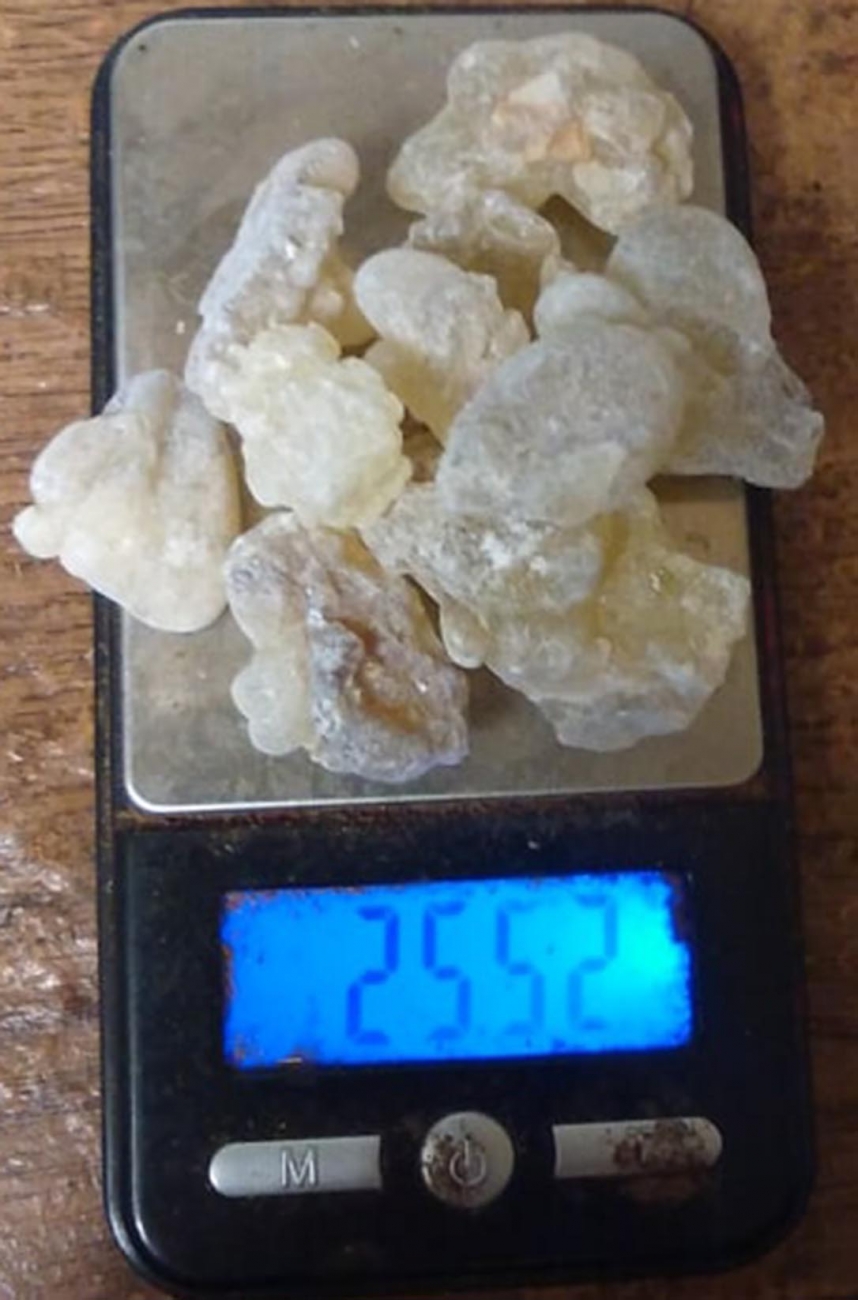
Royal Hojari Frankincense
Frankincense can come from many places such as India, much of Northern and Western Africa, and others. Out of all of the sources of frankincense, The Emirate of Oman still is producing inarguably the best of the very best frankincense. The grading of frankincense is involved, but to cut to the chase of it, everyone wants to know what is the best and just where can it be found. The tippity top of the pyramid is Omani Royal Superior Hojari Frankincense Incense.
It was a bit of a dream to be able to offer such frankincense as it’s cost tends to be prohibitive, but we found an excellent and very kind source that offers such incense at a price good enough for us to carry it now and again. It’s not a steady item, we don’t always have it, so check with us before a road trip for Omani frankincense. If you are a frankincense fan, grab it when you can.
Once set on the charcoal, it will be obvious within seconds that this isn’t ordinary frankincense. This is some next level stuff. It’s exquisitely aromatic, full of citrus, particularly a lime-like note and bergamot (Earl Grey Tea) that only the high end Omani frankincense can boast to have. There’s nothing else like it; it’s peerless in its beauty.
-

Smudging Without Sage
Sometimes one doesn’t want all of the smoke nor wants to deal with the process of smudging with sage. Thank goodness there are options. Some incenses contain sage as a key component, permitting one to purify their environment without sage bundles. One of our favorites is Sandesh White Sage. It has a lovely champa-type core with the addition of white sage. Don’t look for an over-the-top white sage burst; it’s considerably more subtle than that. Another one we have fallen in love with is the wonderful Hari Darshan Copal + White Sage. It combines a lovely semi-sweet amber core with the piney, cleansing property of copal and an earthy note of white sage. We also have these wonderful contribution of HEM White Sage Masala Incense. It’s a dry-type masala incense with notes of white sage. If you want something else exciting, we have a white sage incense with the crisp, clean addition of juniper, go with Sacred Elements Juniper & White Sage Incense. So all is not lost if you wish to smudge without having to deal with sage bundles. We have options-a-plenty.
-
Patchouli Incenses
I became aware of something I was doing for so long without much thought. I was applying patchouli oil directly to incense sticks. I guess without thinking, I was aware of a lack of convincing, true patchouli incense that isn’t choking and has a sweeter component to balance the bitter, earthy notes of patchouli. We do have some patchouli incenses, most of which I do have a high opinion. Having said that, I often feel the need for something more complex or balanced. Without being aware of that need, I added patchouli oil to some of my favorite incenses and it filled a void that I didn’t know I had until it was filled. This lead to the addition of other oils to incenses. Some had amazing, unexpected results (some good, some not). Clove oil on incenses gave them an interesting juicy fruit gum quality. I expected to get dental office and I got juicy fruit…go know.
Failures involved lavender oil, which surprised me a bit, all citrus and any mints. The key to success is using a pure essential oil and a good sweet incense base. I especially have come to enjoy patchouli on sairanjani champa, satya super hit, satya natural, vampire blood, and goloka nag champa. Another point is to avoid getting any of the oil on the very tip of the stick that is to be lit. I also found that putting dots down the length of the stick with little patches without oil work best. That allows intervals of with and without patchouli to not fatigue the nose. Another point is to avoid getting any of the oil on the very tip of the stick that is to be lit. If the oil is ignited, it will burn like a torch and give off acrid sooty smoke…bad. I will continue to mess around with this process. Thus far, it has been interesting. -
A Point On Our Ceramic Incense Burners
One of the things that make us distinctively blessed is that we have an outlet for one of our hobbies. We are (for lack of a better word) amateur ceramics workers. Many hobbyist ceramics folks end up with piles of bowls and cups filling their cupboards, basements, attics, etc. The only outlet most have is to give away their work to the often unappreciative. The recipients closet their gifts and only get to see the light of day when the giver shows up. I was inspired by a combination of the classic Japanese joss stick burners, tea ceremony bowls and incense ceremony (Kodo) bowls. The evolution of the process to create these was so much more involved than I could have imagined.
The types of flaws I was getting (and still sometimes get) baffled every ceramicist I could find. I found a way to prevent those flaws (most of the time) over years of trial. My new way is a bit of a pain in the keister to execute, but it works. Even more tweaking of design has undone other little issues of their use. All of these steps have added up to become quite the process, but here is why we are blessed. Since we couldn’t ever hope to profit from these incense burners, we have no reason to sacrifice on any efforts, time, or material. In fact, we sold a couple of these last week, so what do we do? We run out and buy $300 worth of more ceramics supplies. What madness is this? It’s our kind, and I wouldn’t post this if I felt you wouldn’t understand.


-
0ur House Patchouli
Patchouli… It is part of what we are. Few fragrances are as polarizing as patchouli. Even through the unfair presumption of its wearers’ political ideology and/or lifestyle, the fragrance alone is so provocative that it creates a fairly well defined line of cleavage between those that like and those that dislike. It is like licorice candy or cilantro…love/hate. We are blessed with being in possession of an old lot of perfumer’s grade patchouli oil. Few oils get better with age; patchouli oil is one of the few that does, if carefully stored. What we found was 20-plus year old perfumer’s patchouli oil. It is something rare and wonderful. The entire lot is about 2 kilos. I hand fill these 1/3 ounce roll on vials with this precious anointment. I am able to let them go for $20 for the 1/3 ounce. It is a bit more dear than the Aura Cacia 1/2 ounce, but I can safely say it’s a step up…no disrespect meant to Aura Cacia indeed. 1/3 ounce goes a long way…do not deny yourself the pleasure. If nothing else, swing by, give the tester a whirl, and see for yourself.