Tag: Incense

  • Royal Hojari Frankincense

    Royal Hojari Frankincense

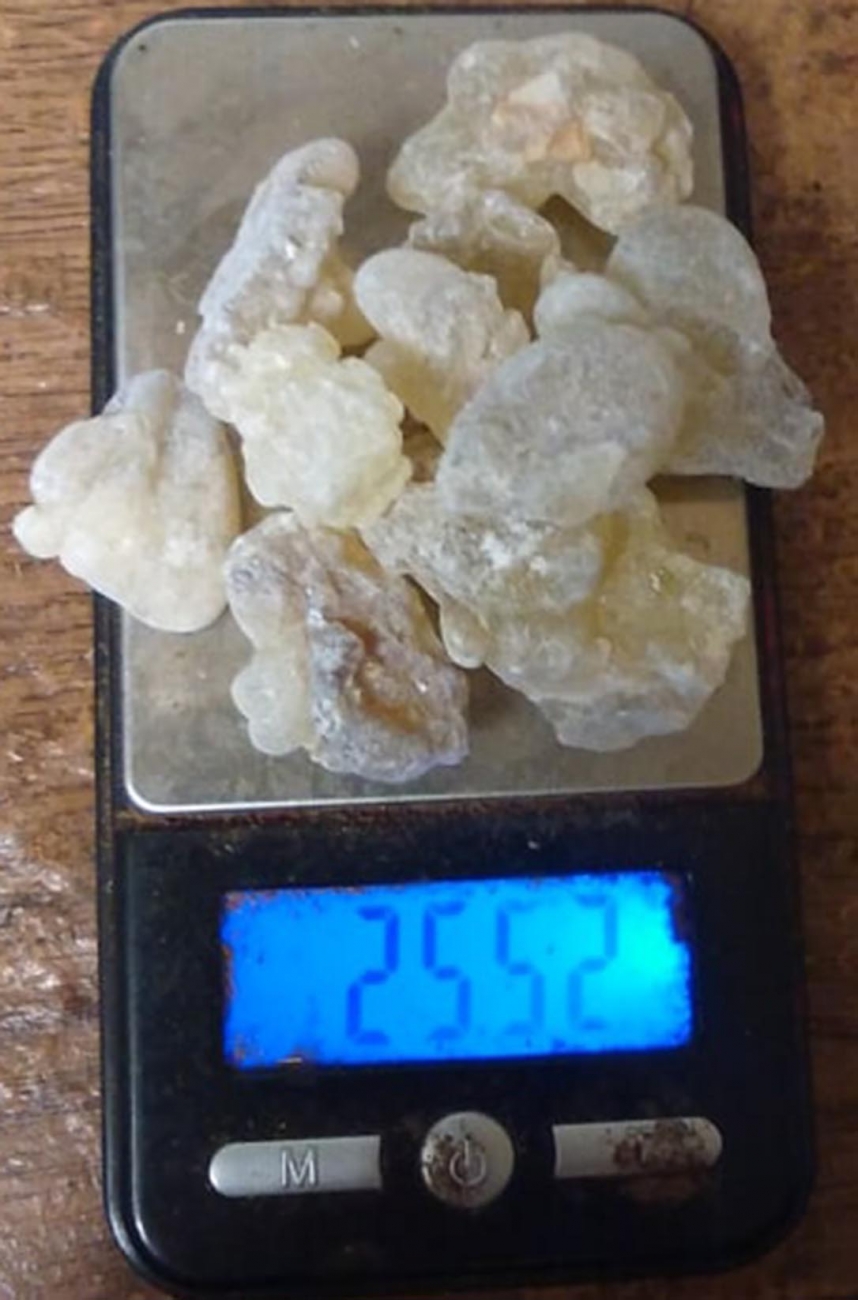
    Frankincense can come from many places such as India, much of Northern and Western Africa, and others. Out of all of the sources of frankincense, The Emirate of Oman still is producing inarguably the best of the very best frankincense. The grading of frankincense is involved, but to cut to the chase of it, everyone wants to know what is the best and just where can it be found. The tippity top of the pyramid is Omani Royal Superior Hojari Frankincense Incense.

    It was a bit of a dream to be able to offer such frankincense as it’s cost tends to be prohibitive, but we found an excellent and very kind source that offers such incense at a price good enough for us to carry it now and again. It’s not a steady item, we don’t always have it, so check with us before a road trip for Omani frankincense. If you are a frankincense fan, grab it when you can.

    Once set on the charcoal, it will be obvious within seconds that this isn’t ordinary frankincense. This is some next level stuff. It’s exquisitely aromatic, full of citrus, particularly a lime-like note and bergamot (Earl Grey Tea) that only the high end Omani frankincense can boast to have. There’s nothing else like it; it’s peerless in its beauty.

  • Smudging Without Sage

    Smudging Without Sage

    Sometimes one doesn’t want all of the smoke nor wants to deal with the process of smudging with sage. Thank goodness there are options. Some incenses contain sage as a key component, permitting one to purify their environment without sage bundles. One of our favorites is Sandesh White Sage. It has a lovely champa-type core with the addition of white sage. Don’t look for an over-the-top white sage burst; it’s considerably more subtle than that. Another one we have fallen in love with is the wonderful Hari Darshan Copal + White Sage. It combines a lovely semi-sweet amber core with the piney, cleansing property of copal and an earthy note of white sage. We also have these wonderful contribution of HEM White Sage Masala Incense. It’s a dry-type masala incense with notes of white sage. If you want something else exciting, we have a white sage incense with the crisp, clean addition of juniper, go with Sacred Elements Juniper & White Sage Incense. So all is not lost if you wish to smudge without having to deal with sage bundles. We have options-a-plenty.

  • About Morning Star Cedarwood Incense

    About Morning Star Cedarwood Incense

    The Morning Star line is all about theme and variation. All of them have the same basic clean, crisp, cooling sandalwood base. Morning Star Cedarwood differs in that it has the addition of refreshing, balsamic cedarwood. It brightens up the fragrance, gives it a distinctive, subtle quality that reminds us of baking apples Morning Star Cedarwood is subtle and gentle enough to appreciate in small environments as it is not heavily perfumed. It can be enjoyed by those who are sensitive to perfumes since it is so light. Each pack comes with a little tile to set the sticks in, but we still recommend putting it on a fireproof surface.

  • SMUDGINB blog 2


    sageBefore you take any action with this strong and powerful ritual, consider your intention.

    Keep this thought clearly in your mind.  Smudging should be done with care and reverence along with a positive attitude and that of love.


    The flame from a candle is recommended to light the smudge that the bundle starts to smoke.  If there is a flame blow it out so that the smudge bundle is smoldering and not burning.   When smudging a room, after the bundle is smoking, you walk around the perimeter of the room.  Give special attention to the corners and the places behind doors.  You can also fan the smoke through the room with a large smudge feather.  If you wish, you may state a payer of gratitude  for the cleansing and keep in mind your intention of removing negativity during the ritual,


    Many people like to break off loose leaves and a candle may be used for them as well.  In the very near future, Dr. Seth will have, along with the wonderful hand-made ceramic incense burners, smudge pots for the use of Smudging rituals.

  • SMUDGING blog 1


    sageOver the years I have sold many bundles of sage and for the most part my customers knew what it was that they wanted to do with it and how they would and why they would “smudge” their environment.  It has come to my attention that there is an interest in this activity.  I will give some information and I am not professing to say these are the total of reasons and/ or activities of this technique.  It is just a small taste of a ritual that is many centures old and used in many different ways with different herbs.

    At Woodstock, we have provided Sage for most of our customers Smudging techniques.  Smudging is the name given to the cleansing technique from Native American.  This tradition of burning herbs for emotional, psychical and spiritual cleansing is practiced among many religious, healing and spiritual traditions.  It is a ceremonial way to cleanse a person, place or object of negative energies.

    Smudging can be helpful for when you feel depressed, angry, and/or restful,  You can smudge your home, work space or crystals to remove negative energy.

    In blog Smudging blog 2 I will talk about how to perform a smudging technique

  • DR. SETH, THE INCENSE GURU OF WOODSTOCK TRADING COMPANY


    photo seth incense talk


    Dr. Seth has an enormous collection of incense fragrances from around the world. His keen sense of smell coupled with scientific knowledge of the composition and aesthetics of materials have made Woodstock Trading Company the “GO TO” place for incense and other fragrance products.


    He earned an M.D. degree in 1993 and decided his inner self would be better served working with his partner and mother (aka MOM) at Woodstock Trading Company. In addition, his creative talents and interests have led him into the world of ceramics. The wonderful hand made incense holders are hand thrown and designed by him.

    Come by and chat with Seth about his favorite subject and get some free samples!!

    Mention this Blog and he will see to it that Mom will pick up the tab on the sales tax of your order.

  • Patchouli Incenses

    I became aware of something I was doing for so long without much thought. I was applying patchouli oil directly to incense sticks. I guess without thinking, I was aware of a lack of convincing, true patchouli incense that isn’t choking and has a sweeter component to balance the bitter, earthy notes of patchouli. We do have some patchouli incenses, most of which I do have a high opinion. Having said that, I often feel the need for something more complex or balanced. Without being aware of that need, I added patchouli oil to some of my favorite incenses and it filled a void that I didn’t know I had until it was filled. This lead to the addition of other oils to incenses. Some had amazing, unexpected results (some good, some not). Clove oil on incenses gave them an interesting juicy fruit gum quality. I expected to get dental office and I got juicy fruit…go know.
    Failures involved lavender oil, which surprised me a bit, all citrus and any mints. The key to success is using a pure essential oil and a good sweet incense base. I especially have come to enjoy patchouli on sairanjani champa, satya super hit, satya natural, vampire blood, and goloka nag champa. Another point is to avoid getting any of the oil on the very tip of the stick that is to be lit. I also found that putting dots down the length of the stick with little patches without oil work best. That allows intervals of with and without patchouli to not fatigue the nose. Another point is to avoid getting any of the oil on the very tip of the stick that is to be lit. If the oil is ignited, it will burn like a torch and give off acrid sooty smoke…bad. I will continue to mess around with this process. Thus far, it has been interesting.

  • A Point On Our Ceramic Incense Burners

    One of the things that make us distinctively blessed is that we have an outlet for one of our hobbies. We are (for lack of a better word) amateur ceramics workers. Many hobbyist ceramics folks end up with piles of bowls and cups filling their cupboards, basements, attics, etc. The only outlet most have is to give away their work to the often unappreciative. The recipients closet their gifts and only get to see the light of day when the giver shows up. I was inspired by a combination of the classic Japanese joss stick burners, tea ceremony bowls and incense ceremony (Kodo) bowls. The evolution of the process to create these was so much more involved than I could have imagined.
    The types of flaws I was getting (and still sometimes get) baffled every ceramicist I could find. I found a way to prevent those flaws (most of the time) over years of trial. My new way is a bit of a pain in the keister to execute, but it works. Even more tweaking of design has undone other little issues of their use. All of these steps have added up to become quite the process, but here is why we are blessed. Since we couldn’t ever hope to profit from these incense burners, we have no reason to sacrifice on any efforts, time, or material. In fact, we sold a couple of these last week, so what do we do? We run out and buy $300 worth of more ceramics supplies. What madness is this? It’s our kind, and I wouldn’t post this if I felt you wouldn’t understand.


    burner 4 burner 2 burner 3